
Nigel Clarke Wind Orchestra Music Volume 3 – Digital Release!!
THE WIND ORCHESTRA MUSIC OF NIGEL CLARKE VOLUME 3
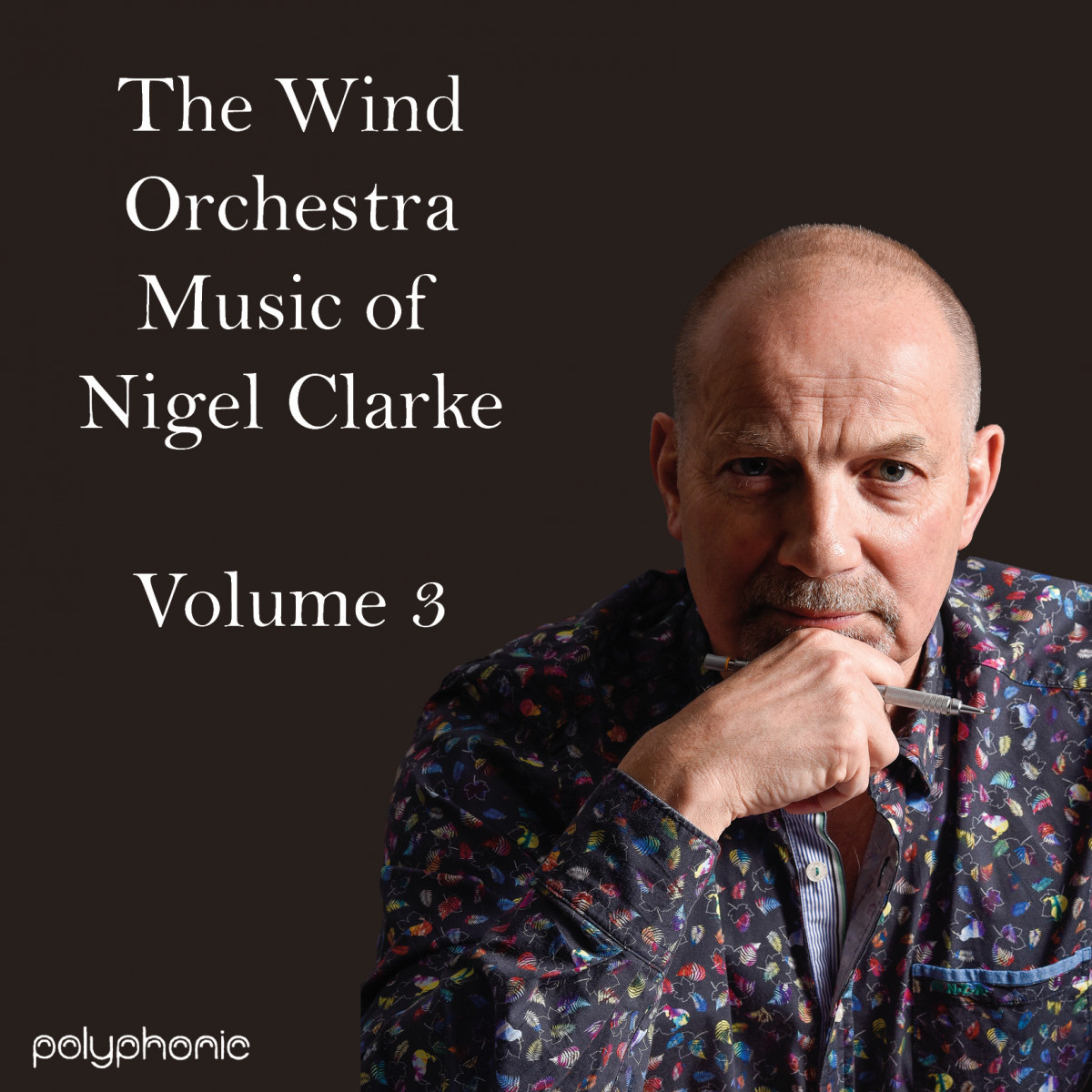 The third of three volumes of Nigel Clarke’s wind orchestra music have been released today (09/12/24) on iTunes and can be downloaded from Amazon Music and streamed on Spotify, Apple Music, ArkivMusic, Youtube Music, Deeper, Tidal and qobuz.
Volume 3 features Samurai, Heritage Suite, Fields of Remembrance, Battles & Chants (Concerto for Clarinet Wind Orchestra), Mata Hari and Forgotten Heroes.
Nigel Clarke is known for his bravura orchestration which is especially reflected in his wind orchestra, orchestral and feature film scores. The Naxos record label says of Clarke: “The Brussels-based British composer Nigel Clarke is renowned for his virtuosic style, and an uncompromising contemporary musical language that speaks with an authentic voice to today’s audiences.”
His first wind orchestra work, Samurai, was commissioned by conductor Timothy Reynish and the Royal Northern College of Music Wind Orchestra in 1995 and received its premiere at the World Association of Symphonic Bands and Wind Ensembles (WASBE) Conference at Hamamatsu in Japan. Samurai became an overnight success and since then has beenperformed by the greatest wind orchestras around the world. Clarke has subsequently written many wind orchestra works, and this digital release will be the first volume of three, showcasing Clarke’s contribution to this genre. The recording focuses on some 30 years of Clarke’s musical development and shows the diversity of his musicianship, with each composition having its own unique flavour and style which is distinct from his earlier work. We hope you enjoy this second volume of the wind orchestra music of Nigel Clarke.
Richard Phillips – Head of Music Division, SATCoL
SAMURAI [Original Version]
Royal Northern College of Music Wind Orchestra / Conductor: Timothy Reynish
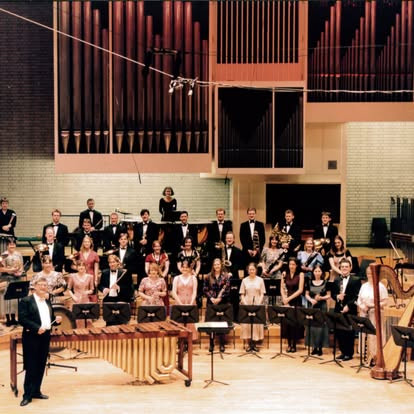
Timothy Reynish and the RNCM Wind Orchestra around the time of recording `Samurai’ (1995).
Samurai is dedicated to and commissioned by Timothy Reynish and the RNCM Symphonic Wind Orchestra for the World Association of Symphonic Bands and Wind Ensembles Conference at Hamamatsu in Japan. The World Premiere was conducted by Sachio Fujioka in July 1995 at the conference.
At the time of writing Samurai, Clarke was seeking to write a work that would not be out of place in a Akira Kurosawa film. Although Samurai is written in one movement, it is divided into three scenes, Signals and Flag, The Ceremony of Departure, and Attack. The first section represents the signalling methods used by the Samurai on the battlefield, where powerful war-drumming and heraldic flags helped identify the various units within the army. The central scene, The Ceremony of Departure is more tranquil representing the review of the troops by the daimyo (aristocratic leader) and his generals before the battle and the ritual offering of prayers presided over by a Buddhist monk. The final scene returns to the powerful Samurai war-drumming, signalling the attack.
Contrary to popular belief not all Samurai were warriors. They were highly educated people from the Japanese military ruling class, the Eastern equivalent of Renaissance men, who were just as skilled in the discipline of warfare as they were in the art of painting and music. Clarke has juxtaposed these two very different facets of the Samurai in this work.
Musical instruments had an important role in early Japanese warfare. On the battlefield a wide range of audible as well as visible signs were used, the most significant of which was the taiko, a large war-drum. Another instrument featured in warfare was the horagai, which was a conch-shell trumpet. The trumpet was sounded to tell the warriors to put their battle plan into action and could be heard up to 6 miles away. When the taiko was heard on the battlefield the Samurai soldiers knew they had to regroup. In ancient rural Japan the village boundaries were not only decided by geography, but also by the farthest distance from which thetaiko could be heard.
HERITAGE SUITE
Royal Northern College of Music Wind Orchestra / Conductor: Mark Heron
- Bric-a-brac Market 2. Prayers and Plagues 3. Cornucopia
- Hop Picker’s Round 5. Warm Beer and Cricket 6. Wyatt’s Rebellion and Hope
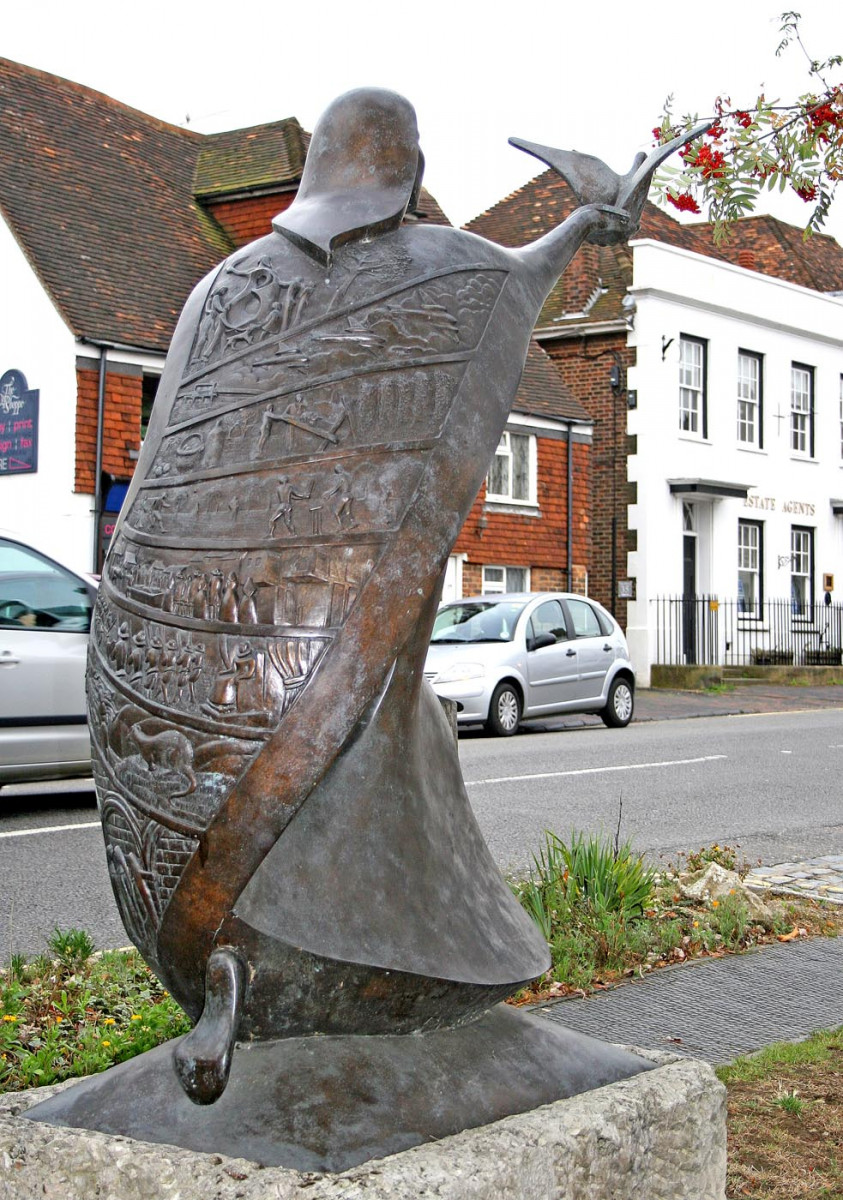
`Hope’ the statue in West Malling (Kent) by Sarah Cunnington that inspired Nigel Clarke’s `Heritage Suite’
Heritage Suite (What Hope Saw) is dedicated to and written for John Hutchins and the members of Eynsford Concert Band. The premiere performance took place in the Tithe Barn, the Pilsdon Centre in the town of West Malling, Kent, UK on 10 October 2009 given by Eynsford Concert Band under the baton of John Hutchins. The USA premiere was given by University of Mississippi Wind Ensemble conducted by David Willson at the College Band Directors National Association Conference (CBDNA), University of Mississippi, USA on 24 February 2010.
The Eynsford Concert Band asked Nigel Clarke to write a work inspired by the bronze sculpture by Sarah Cunnington entitled Hope. The sculpture, found on the Green in West Malling, is in the shape of a woman running with a dove perched on her hand. The woman’s cloak billows out behind her and contains eight panels describing the town’s local history over the centuries. Historians often focus on the big events that shape our world, but the themes within the eight panels are more about the fabric of day-to-day life that makes up West Malling’s heritage.
The suite is a six-movement work that represents these eight different subjects. To give it a sense of unity, musical ideas from previous movements reappear in unexpected places implying that history often repeats itself. Many quotations and allusions are used throughout to represent West Malling’s history. Some of these are obvious, including the familiar hymn We Plough the Fields and Scatter but there are fragments from a 16th century carol to represent the convent along with the 13th century plainsong Dies Irae by Thomas of Selano. The influence of a number of British composers is clearly audible, most significantly Sir William Walton, Eric Coates and Ron Goodwin. To accompany Heritage Suite and explain West Malling’s history in more detail, Martin Westlake has written a poem entitled What Hope Saw.
- 1. Bric-a-brac Market – is a jocular movement that represents West Malling as a medieval market town, full of colour, energy and commerce as well as the odd eccentric character.
- Prayers and Plagues – combines two of the subjects depicted by Sarah Cunnington, the Nuns’ centre of prayer and the Black Death. The movement opens with a brass chorale based on The Coventry Carol: we also hear a plainsong representing the nuns at prayer, together with eastern-sounding phrases that remind us of the crusades fought between 1095 and 1291. The Waltonesque Dies Ire dominates the central section of this movement and represents the Black Death.
- Cornucopia – is a celebration of West Malling’s farming history in the form of a fanfare with references to the hymn tune We Plough the Fields and Scatter.
- Hop Picker’s Round – is a light-hearted depiction of hop-pickers sampling local ales after a day of gathering the famous Kent hops.
- Warm Beer and Cricket – is the most English and pastoral in flavour. The title references the former Prime Minster, John Major’s famous quotation that “England will remain a country of long shadows on cricket grounds, warm beer, invincible green suburbs, dog lovers and pools fillers”. The movement combines two subjects, the first recorded cricket match and the Royal Air force fighter station at Kings Hill. The introduction to this movement evokes a perfect summer’s day in Kent.
- Wyatt’s Rebellion and Hope – starts with a simple march-like idea in the percussion and builds towards the work’s finale section (Hope), which, triggered by the fanfare heard in Cornucopia, brings the work to an optimistic and triumphant close.
What Hope Saw
by Martin Westlake
From the control tower she gazed out on Kings Hill
And saw the Walrus dancing with Amy Johnson in the mist,
Whilst the crews of phantom squadrons scrambled across the grass
Where All Muggleton and Dingley Dell played for posterity
On the back of a ten pound note as it changed hands
In West Malling’s flourishing market.
2.
Looking down from Gundulf’s keep she wept as the market goers
Sneezed and bled, dwindling down to fifteen
Desperate souls who’d ever mourn and say
How prayer had saved them as the shadow moved on,
Leaving just four sisters to sing for deliverance.
3.
She watched the hay bales graze in Old Kent’s stubbled jowl;
In winter, she saw the apple trees claw upwards from his chest to scratch
His sheep-maggoty cheeks. In spring, the farmers ploughed his chin
And talced his blue-ish skin with scattered seed so that each summer
His beard would grow and the altars fill with abundance.
4.
She smiled through the golden screens of hop tresses as the pickers
Supped and drank, sprawled on the Swan’s lawns or astride its benches,
Happily distant from East End murk and stench.
Through the night the brewer’s drays dragged their fragrant loads to Faversham,
Where the flower cones tumbled into gurgling coppers.
5.
She lounged behind the boundary rope, sipping fresh scented summer ale,
And watched the shadows slowly stretch out to tickle her toes
As willow and leather and whites and wickets commingled
With sparrowed hedges, holleyhocked gardens and milk-bottled porches,
Whilst the shadows of spitfires and mosquitoes flitted overhead.
6.
She stood at the entrance to Ford House and watched Wyatt drift fruitlessly
Back from Ludgate. She closed her eyes as the rebellion was crushed and Wyatt
Beheaded, but when she opened them again his lands had been returned,
The market was flourishing and the Abbey was rich in song and prayer,
A concert band played in the Tithe Barn,
And in history’s mirror she saw herself running, dove in hand, towards… hope.
BATTLES AND CHANTS (Concerto for Clarinet and Wind Orchestra)
Royal Northern College of Music Wind Orchestra / Clarinet: Linda Merrick / Conductor: James Gourlay
- Foreign Invader 2. Betrayal 3. Defeat of the Southern Tribes
The work aims to describe the struggle of Cassivellaunus, a tribal leader in Britain in 54 BC. He tried to repel Julius Caesar and his legions, who were advancing into what is today known as Hertfordshire. Cassivellaunus was the leader, or possibly the King, of a tribe called the Catuvellauni, which was the strongest of the southern tribes. They were initially successful in defending against Caesar’s forces; Caesar was impressed by the agility of the charioteers and described how they would charge into battle, drop off foot soldiers, then retire to later return and pick up the exhausted soldiers whilst bringing in fresh troops. Cassivellaunus’ success was short lived, as neighbouring tribes soon betrayed him and gave away the location of his stronghold, which was probably located at Wheathampstead in Hertfordshire. Caesar described the crude fort in his Conquest of Gaul as “a place well defended by nature and fortified by camouflage with a rampart and trench, it was probably built for use in their own tribal wars. All the entrances were blocked by felled trees and bushes packed tightly together.” It was not long before Caesar gained the upper hand and accepted Cassivellaunus’ surrender. His life was spared and after supplying slaves and paying a tribute in the form of a tax to Rome, he became a puppet leader forced to serve the Empire. Cassivellaunus was probably one of the first freedom fighters in British history, but apart from a few historical footnotes most of his exploits are the subject of speculation. Battles and Chants is in three movements. The solo clarinet can be heard in the role of Cassivellaunus defending his territory against the Romans (the wind and brass instruments), and on occasions the clarinet wins the upper hand.
The first movement, Foreign Invader, starts slowly on the timpani and leads to a clarinet solo followed by a full-blooded fanfare representing Cassivellaunus, commander of the southern tribes. This section soon changes tempo, anticipating battles and skirmishes to come.
The second movement, Betrayal, is the emotional core of the concerto, with Cassivellaunus contemplating defeat. The timpani start the movement, reflecting the opening of the first. A hymn-like chant in the wind and brass allows the soloist to soar over the top of the band with melancholic phrases.
The third and final movement, Defeat of the Southern Tribes, starts with Caesar, represented by the percussion section, marching towards Cassivellaunus’ Hertfordshire stronghold for the final showdown. After a full-blooded battle the work ends with the final sounding of Cassivellaunus’ fanfare, but this time heralding his defeat and Caesar’s victory.
The work was commissioned by and dedicated to Linda Merrick, Philip Ellis, and the Hertfordshire County Youth Wind Orchestra, which gave the first performance on 19 April 2000 at the Royal Academy of Music, London, under the baton of the composer.
FIELDS OF REMEMBRANCE
Royal Northern College of Music Wind Orchestra / Conductor: Mark Heron
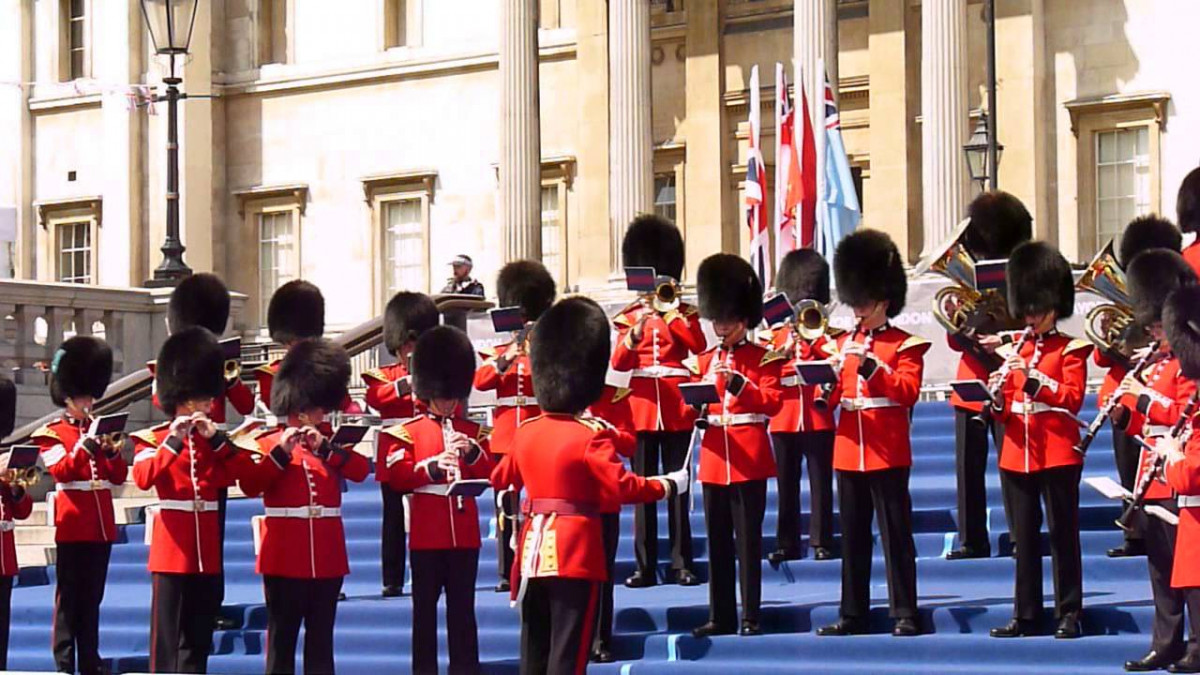 Fields of Remembrance is a symphonic portrait in one continuous movement in honour of the Grenadier Guards’ great history. The work is generally optimistic, and the central section portrays in music the recent military operations undertaken by the Regiment. Fields of Remembrance is based on one of the most important pieces of music associated with the Grenadier Guards, the regimental slow march The Grenadier’s Return, which is performed at memorial and funeral services of Grenadier Guardsmen. It is also played when the regiment returns to camp or quarters after tours of duty, and at ceremonial occasions such as the Changing the Guard at Buckingham Palace, Windsor Castle and St James’ Palace and most famously by the brigade of Guards at the monarch’s birthday parade Trooping the Colour.
The Band of the Grenadier Guards is the oldest band in the British army. In 1656 King Charles II raised a regiment from his loyal exiles at Bruges, Belgium. Originally called The Royal Regiment of Guards, the name was changed in 1815 after the defeat of Napoleon at Waterloo. to The First or Grenadier Regiment of Foot Guards. The first mention of music in the Regiment is a Royal Warrant issued by King Charles II in 1685 (the year of the birth of both Handel and Bach) authorising the maintenance of 12 hautbois (the forerunner of the oboe). In 1783 the band consisted of only 8 musicians: 2 oboes, 2 clarinets, 2 horns and 2 bassoons; Over time the band has extended its instrumental variety and now comprises the standard instrumentation that makes up today’s concert band. The work is dedicated to Major Barry Wassell and the members of The Band of the Grenadier Guards in support of the Colonel’s Fund, Grenadier Guards 2008. The premiere was given in a private performance to the patron of the Colonel’s fund, His late Royal Highness Prince Philip, Duke of Edinburgh. The Colonel’s Fund was created at the end of 2007 to help the families of those killed and wounded in action by promptly responding to problems of bereavement and hardship and to supplement existing charitable funds. In their tour of duty in Afghanistan The Grenadier Guards suffered 5 fatalities, with 32 guardsmen seriously injured. Fields of Remembrance was written for the Band’s tour of England (August 2008) to raise money for the Colonel’s fund.
MATA HARI
Royal Northern College of Music Wind Orchestra / Conductor: James Gourlay
- Dancer in the Shadows 2. Deceit and Seduction 3. Evasion and Capture
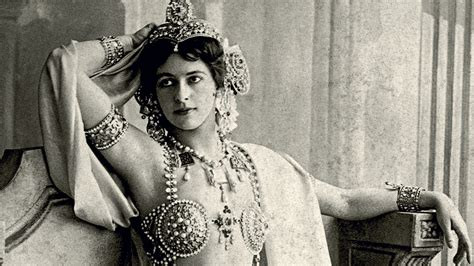
Mata Hari
Mata Hari was commissioned by and is dedicated to Dr. Matthew J. George and the University of St. Thomas Symphonic Wind Ensemble, St. Paul, Minnesota, USA, which gave the first performance in Orchestra Hall, St. Paul, Minnesota on 20 October 2002.
The work is written as three symphonic scenes. The first, Dancer in the Shadows, focuses on Mata Hari the dancer, entertaining troops at the outbreak of the Great War. The second, Deceit and Seduction, describes Mata Hari the seductress, wooing her lovers to gain that vital piece of pillow talk. The third, Evasion and Capture, depicts Mata Hari in the eye of the storm, with hostile forces moving against her. The triumphant ending reflects her final defiant moments.
Margaretha Geertruida Zelle-McLeod, better known as Mata Hari, was born in Holland in 1876 and executed by a French firing squad as a spy on 15 October 1917. There are many unanswered questions about her life and new evidence suggests that she may not have been a spy at all. It is probable that she was guilty of passing information to more than one side and this, combined with her (in the eyes of the authorities) immoral lifestyle and the embarrassment she caused the establishment ultimately condemned her at her secret trial. Myth and truth start to mix when she moved to France at the beginning of the 20 century and became an exotic dancer. Her beauty was legendary and her star quality evident in the glamorous pictures of her that have survived. She gave herself the stage name of Mata Hari, which means ‘Eye of the Day’ in Malay. Her lifestyle led her to move in Europe’s highest circles, including having an affair with the Crown Prince of Germany. She began to associate with men that would have had access to intelligence sought after in the murky world of espionage. It is known that she was under surveillance by the British MI5 in 1915, whilst also under the watchful eye of the French authorities. At her trial she is known to have confessed to being the German spy known as ‘H21’ although the truth of this has never been validated.
At her execution she was reputedly defiant to the end, refusing to have a blindfold, and was said to have maintained a smile at the soldiers who were twelve traditional paces away from her. Though her life ended at the age of 41 Mata Hari’s memory lives on as the most famous seductress and spy of the 20th century.
FORGOTTEN HEROES
Royal Northern College of Music Wind Orchestra / Conductor: James Gourlay
Forgotten Heroes is jointly dedicated to Colonel Haluk Erten (Harmonic Band of the Turkish Armed Forces) and to Major Denis Burton (Band of Her Majesty’s Grenadier Guards).
The composer writes: Forgotten Heroes owes much to my early influences as a musician in the Band of Her Majesty’s Irish Guards. I also drew inspiration from my experiences visiting the Harmonic Band of the Turkish Armed Forces in Ankara in 2003. This unique opportunity exposed me to the Band’s unusual percussion instruments combined with colourful scales and modes associated with the music of the Middle East. The joint dedicatee, the Grenadier Guards Band, is the oldest band in Britain and has witnessed the entire development of British military music. It was not until my visit to Ankara, however. that I learned to what extent Turkish military music has influenced western classical music. I have written the piece to emulate the type of march-overture which one might encounter in an epic war movie and is cinematic in style. The year of writing (2005) saw celebrations throughout the world to commemorate the end of the Second World War. A common phrase when listening to veterans from this period in interviews is that they repeatedly tell the younger generation to ‘never forget those that laid their lives down in the name of freedom’. The title of my march is a small contribution to keeping their memory alive.
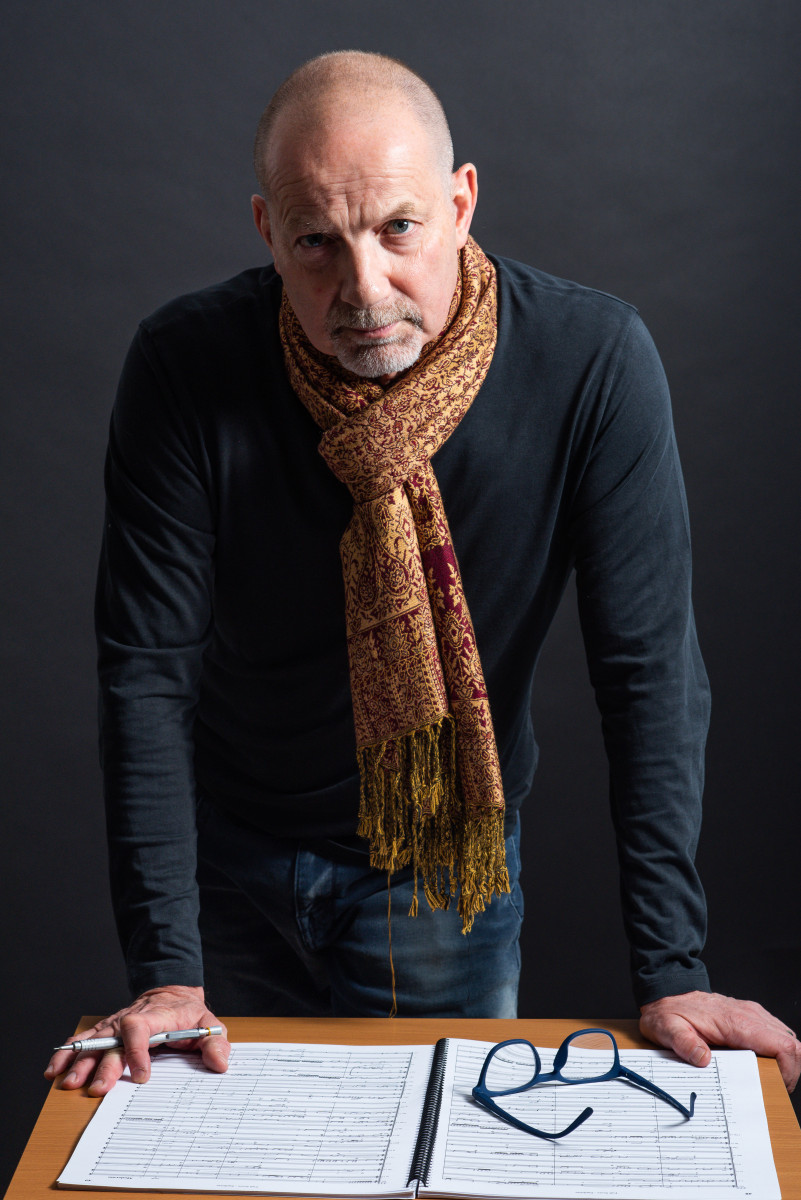 NIGEL CLARKE (b.1960) The British composer Nigel Clarke grew up in the seaside town of Margate, UK and though not from a musical family, developed a lifelong love of music at an early age while learning a brass instrument at school. At 16 he joined the Royal Marines as a junior military bandsman and went on to serve in the Band of the Royal Army Medical Corps and ultimately the Band of the Irish Guards. His desire to write music was encouraged at the Royal Military School of Music, Kneller Hall. This led him study composition at the Royal Academy of Music, London with Paul Patterson.
During his professional career Clarke has held posts as Composition and Contemporary Music tutor at the Royal Academy of Music, and Head of Composition at the London College of Music and Media. His many national and international residencies and associations include positions with the Young Concert Artist Trust, The Hong Kong Academy for Performing Arts, Black Dyke Band, Brassband Buizingen, Grimethorpe Colliery Band and Middle Tennessee State University. Clarke’s longest musical collaboration has been with violinist Peter Sheppard Skærved.
Clarke’s scores include works for symphony orchestra, brass, wind, and chamber combinations, and he has also been nominated for numerous awards for his compositions for the concert hall and for film. His works are recorded on many prestigious labels and are performed worldwide.
LINDA MERRICK (Clarinet)
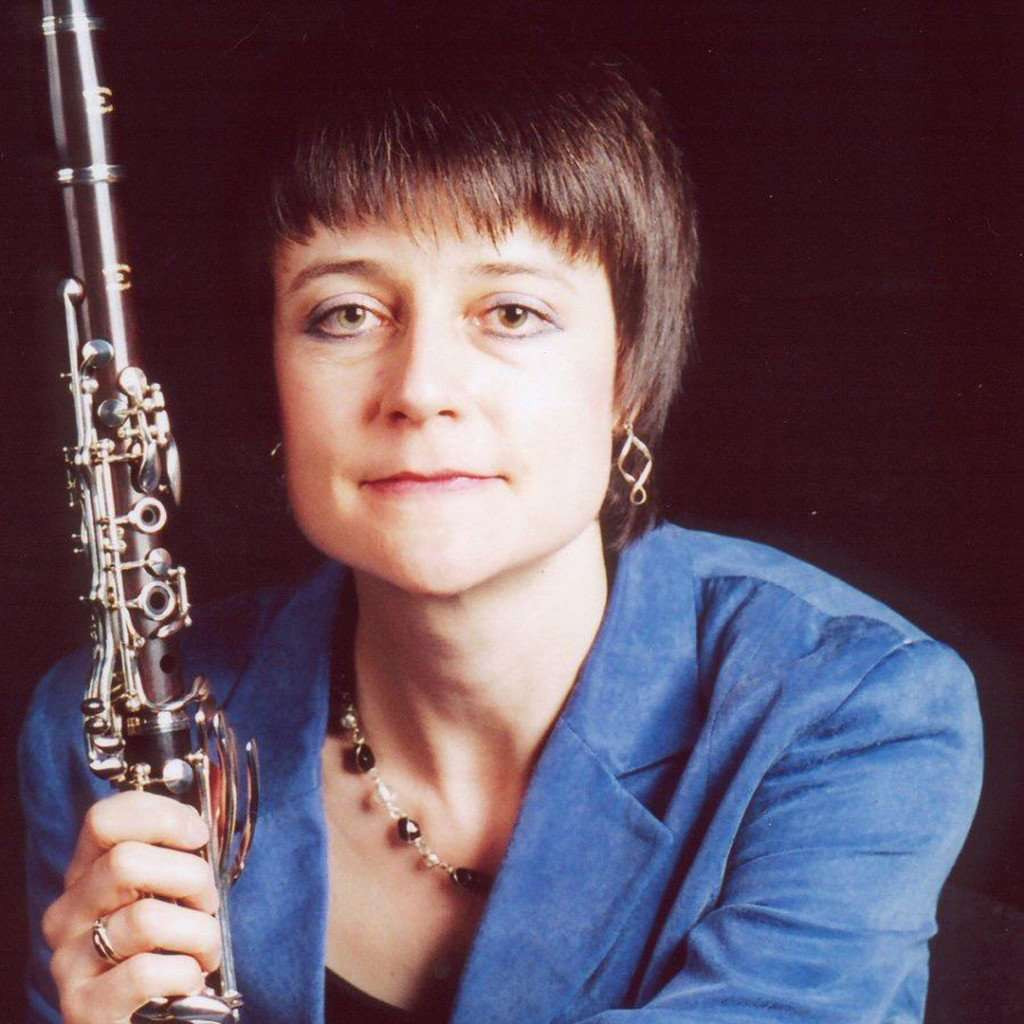 Professor Linda Merrick CBE is Principal of the RNCM and an internationally-renowned clarinet soloist, recording artist and pedagogue.
Her catalogue of over 40 solo recordings features new concertos she has commissioned by Gary Carpenter, Nigel Clarke, Martin Ellerby, John McLeod, Stephen McNeff, Edwin Roxburgh, Philip Sparke, Philip Spratley, Kit Turnbull and Guy Woolfenden for labels including Naxos, Chandos, NMC, Guild and Metier. She has also released premiere recordings of clarinet quintets with the Navarra and Kreutzer Quartets by composers including Simon Bainbridge, Nigel Clarke, Robert Crawford, Michael Finnissy, Wilfred Josephs, John McCabe and Edwin Roxburgh, with recordings of works by Adam Gorb, David Horne, Mihailo Trandifilovski, Paul Patterson and Paul Pellay due to be released in 2024. In addition, Linda has commissioned and recorded over 20 works for clarinet and electronics, and released two CDs featuring works for clarinet and harpsicord by Robert Keeley.
Linda has performed as a concerto soloist across America, Asia, Australia, Europe, South America, the UAE and the UK, and broadcast for BBC Radio 3, Radio France, DRS1 Switzerland, CKWR Canada and Arte TV South Korea. A founder member of the contemporary ensemble ‘Sounds Positive’, she has premiered over 80 chamber works for winds and piano by British composers, and released a further three CDs.
In addition to her position as Principal at the RNCM, Linda is Chair of Conservatoires UK and UK representative for TW Howarth Clarinets. She was awarded a CBE for services to music in higher education in the 2023 King’s New Year Honours.
ROYAL NORTHERN COLLEGE OF MUSIC WIND ORCHESTRA
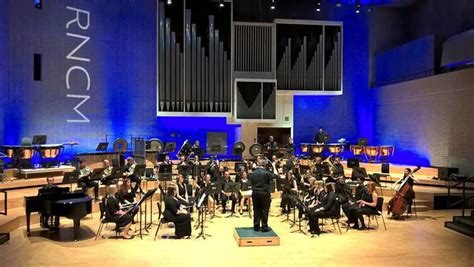 The RNCM Wind Orchestra is one of several large-scale ensembles that make up the wide diversity of music-making at one of the world’s leading music conservatoires. In 2000, the RNCM was awarded a second Queen’s Anniversary Prize for Higher and Further Education in recognition of its ‘outstanding education work’. The citation reads: “Through a unique series of commissions, broadcasts, professional recordings, and world-wide performances by its staff and students, the College has transformed the repertoire and performance standards of wind ensemble music in this country. Its outstanding achievements in this field have brought international acclaim.”
Professor Linda Merrick CBE is Principal of the RNCM and an internationally-renowned clarinet soloist, recording artist and pedagogue.
Her catalogue of over 40 solo recordings features new concertos she has commissioned by Gary Carpenter, Nigel Clarke, Martin Ellerby, John McLeod, Stephen McNeff, Edwin Roxburgh, Philip Sparke, Philip Spratley, Kit Turnbull and Guy Woolfenden for labels including Naxos, Chandos, NMC, Guild and Metier. She has also released premiere recordings of clarinet quintets with the Navarra and Kreutzer Quartets by composers including Simon Bainbridge, Nigel Clarke, Robert Crawford, Michael Finnissy, Wilfred Josephs, John McCabe and Edwin Roxburgh, with recordings of works by Adam Gorb, David Horne, Mihailo Trandifilovski, Paul Patterson and Paul Pellay due to be released in 2024. In addition, Linda has commissioned and recorded over 20 works for clarinet and electronics, and released two CDs featuring works for clarinet and harpsicord by Robert Keeley.
Linda has performed as a concerto soloist across America, Asia, Australia, Europe, South America, the UAE and the UK, and broadcast for BBC Radio 3, Radio France, DRS1 Switzerland, CKWR Canada and Arte TV South Korea. A founder member of the contemporary ensemble ‘Sounds Positive’, she has premiered over 80 chamber works for winds and piano by British composers, and released a further three CDs.
In addition to her position as Principal at the RNCM, Linda is Chair of Conservatoires UK and UK representative for TW Howarth Clarinets. She was awarded a CBE for services to music in higher education in the 2023 King’s New Year Honours.
JAMES GOURLAY (Conductor)
 James Gourlay is internationally recognised as a soloist and chamber music player of distinction, whose performances of the Vaughan Williams Tuba Concerto, both in London at the Henry Wood Promenade Concerts and in Japan, have been greeted with critical acclaim. He also gave the first British performances of Lacheman’s Harmonia (with the BBC Symphony Orchestra) as well as Penderecki’s Capriccio for solo tuba. World premieres given by him include works by Horovitz, Sparke, Ellerby, Newton and Steptoe. Formerly Principal Tuba with the Zurich Opera, BBC Symphony Orchestra and the City of Birmingham Symphony Orchestra and Musical Director of Brass BandBerner Oberland and the Williams Fairey Band, James Gourlay is also a former Head of the School of Wind and Percussion at the Royal Northen College of Music.
MARK HERON (Conductor)
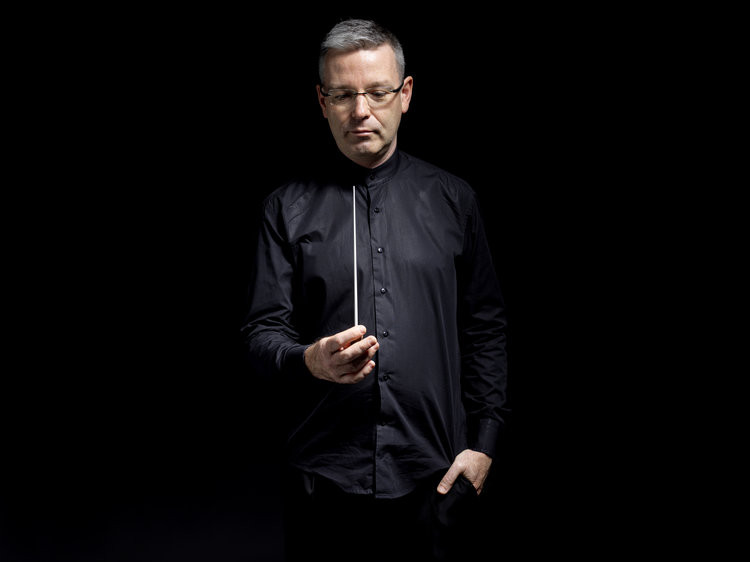 Mark Heron is a Scottish conductor known for dynamic and well-rehearsed performances across an unusually wide range of repertoire, and his expertise as an orchestral trainer.
As guest conductor he has appeared with the, BBC Philharmonic, BBC Concert, Philharmonia, Royal Liverpool Philharmonic Orchestra, Royal Scottish National Orchestra, Manchester Camerata, Psappha, Meininger Hofkapelle, Orquesta Sinfónica de la Región de Murcia, Pori Sinfonietta, St Petersburg Festival Orchestra and many more. He is the Music Director of the Nottingham Philharmonic and Professor and Head of Conducting at the Royal Northern College of Music. At the RNCM he works regularly with all of the College’s orchestras and ensembles and runs the world-renowned conducting programmes. Mark is the conductor laureate of the Liverpool Mozart Orchestra and for ten years was Director of Orchestras at the University of Manchester.
Dedicated to working with young musicians, in addition to his role at the RNCM, Mark has conducted ensembles from the Royal Academy of Music, Royal Conservatoire of Scotland, Escola Superior de Música de Lisboa, Tilburg & Maastricht Conservatories, the National Youth Wind Orchestras of Great Britain, Wales and Israel, Slovenian National Youth Orchestra, and many more.
Mark has a keen interest in contemporary music and has given world premieres of many important works. He has collaborated with leading composers such as Kalevi Aho, Sir George Benjamin, Sir Harrison Birtwistle, Unsuk Chin, Tansy Davies, Detlev Glanert, Heiner Goebbels, Anders Hillborg, Giya Kancheli, Magnus Lindberg, Sir James McMillan, Colin Matthews, Christopher Rouse, Kaija Saariaho, and Mark Anthony Turnage. In 2018 he gave the the world premiere of Adam Gorb’s opera The Path to Heaven, and in 2006 the European premiere of American composer Daron Hagen’s opera, Bandanna. He has recorded dozens of CDs with the RNCM Wind Orchestra featuring contemporary wind repertoire on labels such as Chandos, Naxos, NMC, ASC and Polyphonic. Other recording projects have included CDs with the BBC Concert Orchestea and the Royal Liverpool Philharmonic and numerous radio broadcasts with BBC orchestras.
Mark studied at the RSAMD and the RNCM. Following a successful chamber music career and freelance work with many of the UK’s professional symphony orchestras, he undertook conducting studies at the RNCM and in master classes with Neeme & Paavo Järvi, Jorma Panula, and Sir Mark Elder. He worked with Sir Colin Davis and the London Symphony Orchestra on their mentoring programme for young conductors.
Alongside his conducting engagements, Mark is recognised as one of the world’s foremost conducting teachers, and students of his have achieved notable success internationally. As well as his work across all of the RNCM’s renowned conducting programmes, he developed an elite undergraduate conducting programme at the University of Manchester, is a visiting professor to the Royal Air Force and appears often as a guest at conducting courses and master classes all over the world.
TIMOTHY REYNISH (Conductor)
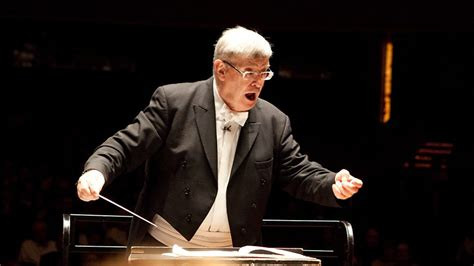 Timothy Reynish studied horn with Aubrey Brain and Frank Probyn, was a music scholar at Cambridge, working under Raymond Leppard and Sir David Willcocks, and after graduating held principal horn positions with the Northern Sinfonia, Sadler’s Wells Opera (now ENO) and the City of Birmingham Symphony Orchestra. His conducting studies were on short courses with George Hurst, Sir Charles Groves and Sir Adrian Boult, inter alia, and he was a prize winner in the Mitropoulos International Conducting Competition in New York. He subsequently conducted many professional orchestras, including appearances at the Proms and internationally.
In 1975 he became tutor for the Postgraduate Conducting Course at the Royal Northern College of Music, two years later succeeding Philip Jones as Head of School of Wind & Percussion. At the RNCM, he conducted a wide range of opera, and developed the wind orchestra and ensemble of the RNCM to become one of the best in the world, commissioning works from many distinguished composers He was awarded a Churchill Travelling Fellowship in 1982 to study the development and repertoire of the American symphonic wind band movement, and in the following two decades he developed the wind orchestra and ensemble of the RNCM to become one of the best in the world, commissioning works from many distinguished composers, performing regularly in major Festivals, broadcasting for BBC and Classic FM, and playing at WASBE Conferences. In the nineties he emerged as one of the leading conductors of wind bands and wind ensembles in the world, and in the past few years he has conducted many of the principal professional bands in Asia, Europe, North and South America. See Full Biography: Timothy Reynish
MARTIN WESTLAKE (Poet)
 Born in 1957, Martin Westlake is an author and academic. He has studied and worked in the UK, Italy, France and Belgium. His historical novel, Other Than an Aspen Be, is currently on submission.
Production Team:
Producer: Dr Martin Ellerby / Associate Producer: Kit Turnbull
Recording Engineers: Chris Thorpe
Recorded at the RNCM Manchester, UK / Samurai recorded in May 1996 at the Zion Institute, Hulme.
Polyphonic Reproductions would like to thank:
Dr Martin Ellerby, , James Gourlay, Mark Heron, Stan Kitchen, Prof Linda Merrick CBE, The Royal Northern College of Music, Timothy Reynish, Heidi Sones, Maecenas Music, Studio Music Company, Martin Westlake, Paul and Sandra Williams, Malcolm Binney, Maecenas Music, Maggie Barton and Stella Wilson.
Nigel Clarke photograph by Alexandre Badiqué
© 2024 Polyphonic Records